


Parameter
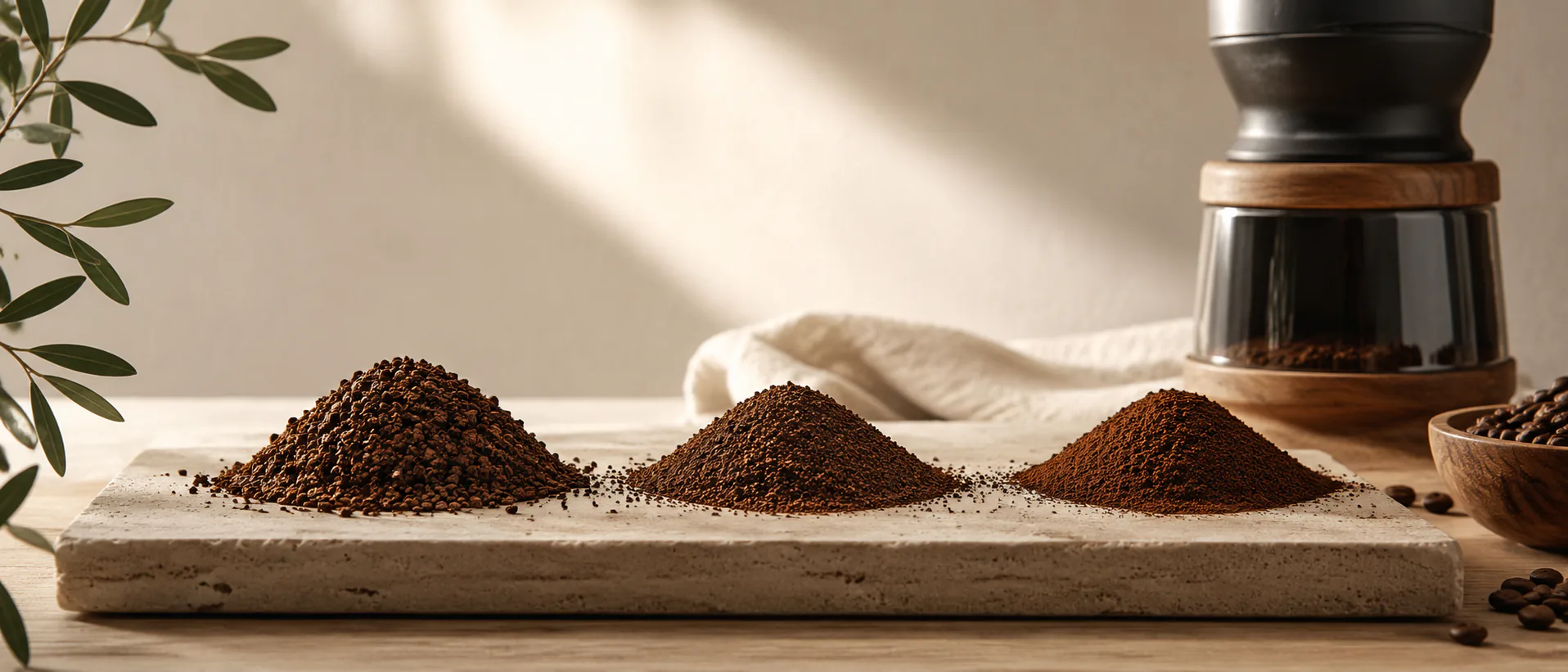
Grind
Particle size governs extraction speed. The finer it is, the more resistance the water meets; the coarser it is, the faster it flows through. Each method needs its own balance.
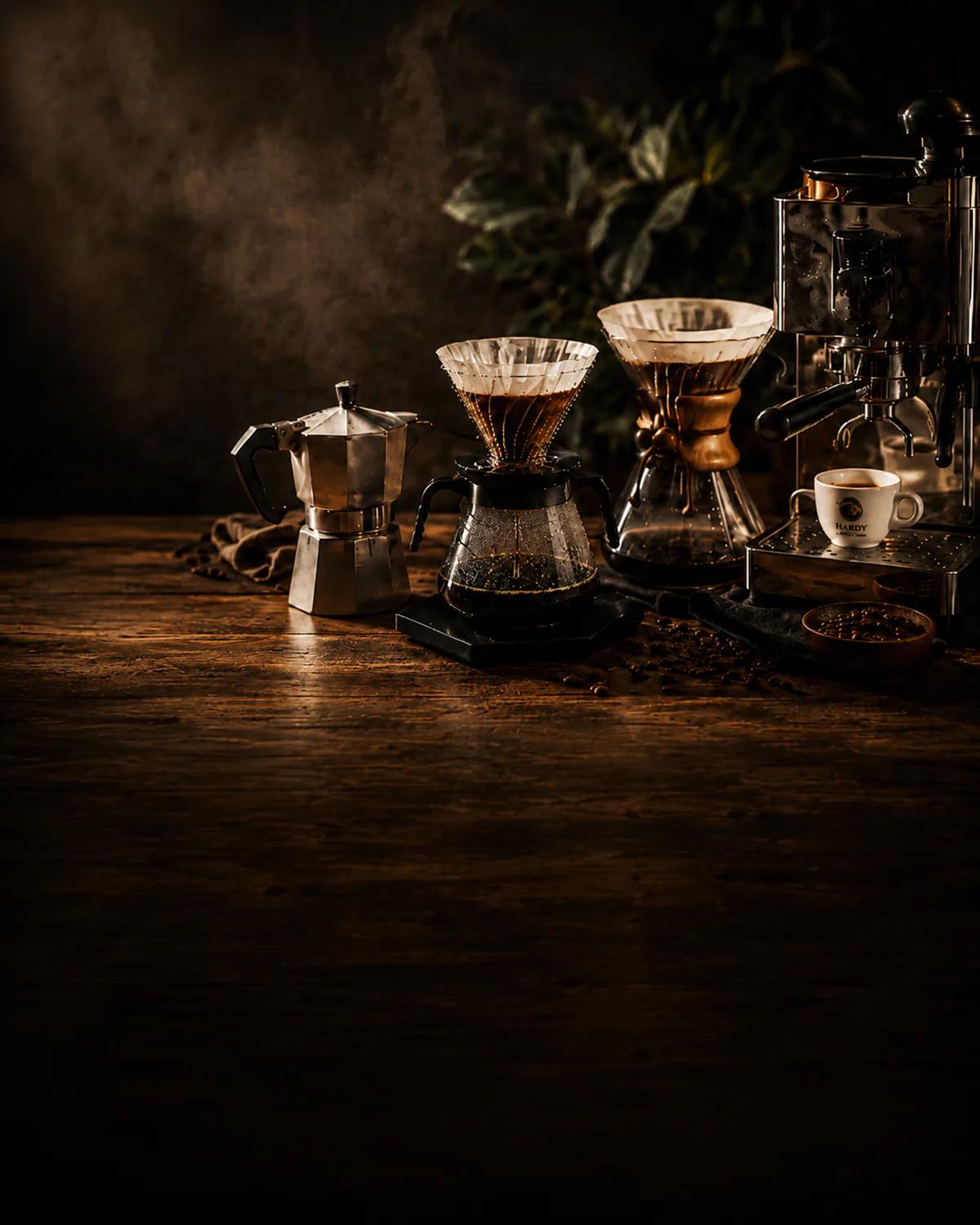
The same blend can become very different cups. Water, pressure, time, paper, grind and technique all change. Knowing the methods helps you choose better and serve with greater awareness.
Before the method
Before choosing between espresso, moka or filter, look at what they share. Good brewing is not guesswork: it is a balance of precision, raw material and small repeatable adjustments.
Parameter
Particle size governs extraction speed. The finer it is, the more resistance the water meets; the coarser it is, the faster it flows through. Each method needs its own balance.

Parameter
The cup is largely water. Purity, hardness and mineral composition affect body, sweetness, acidity and aromatic clarity. The right water lets the coffee speak.
Parameter
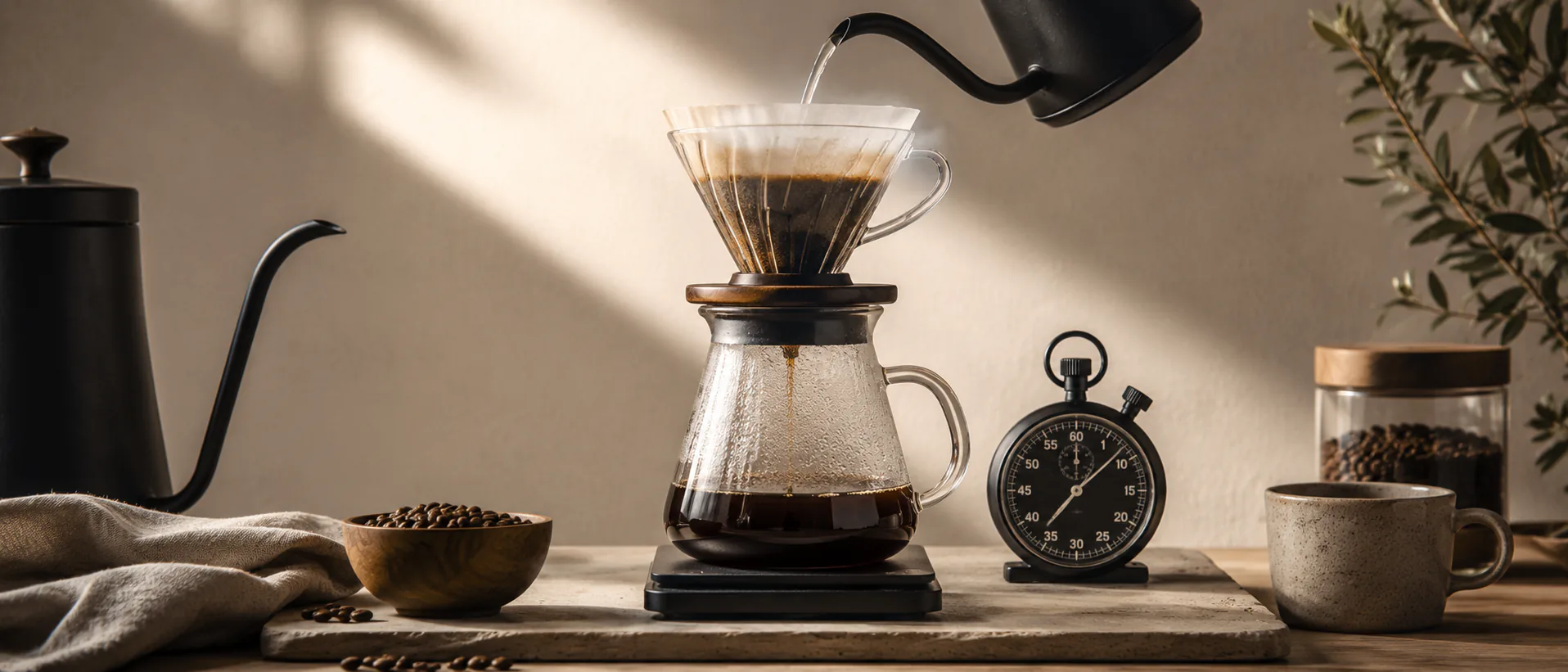
Seconds or minutes measure the contact between water and coffee. Too short and extraction stays incomplete; too long and bitterness, dryness and loss of precision appear.
Parameter
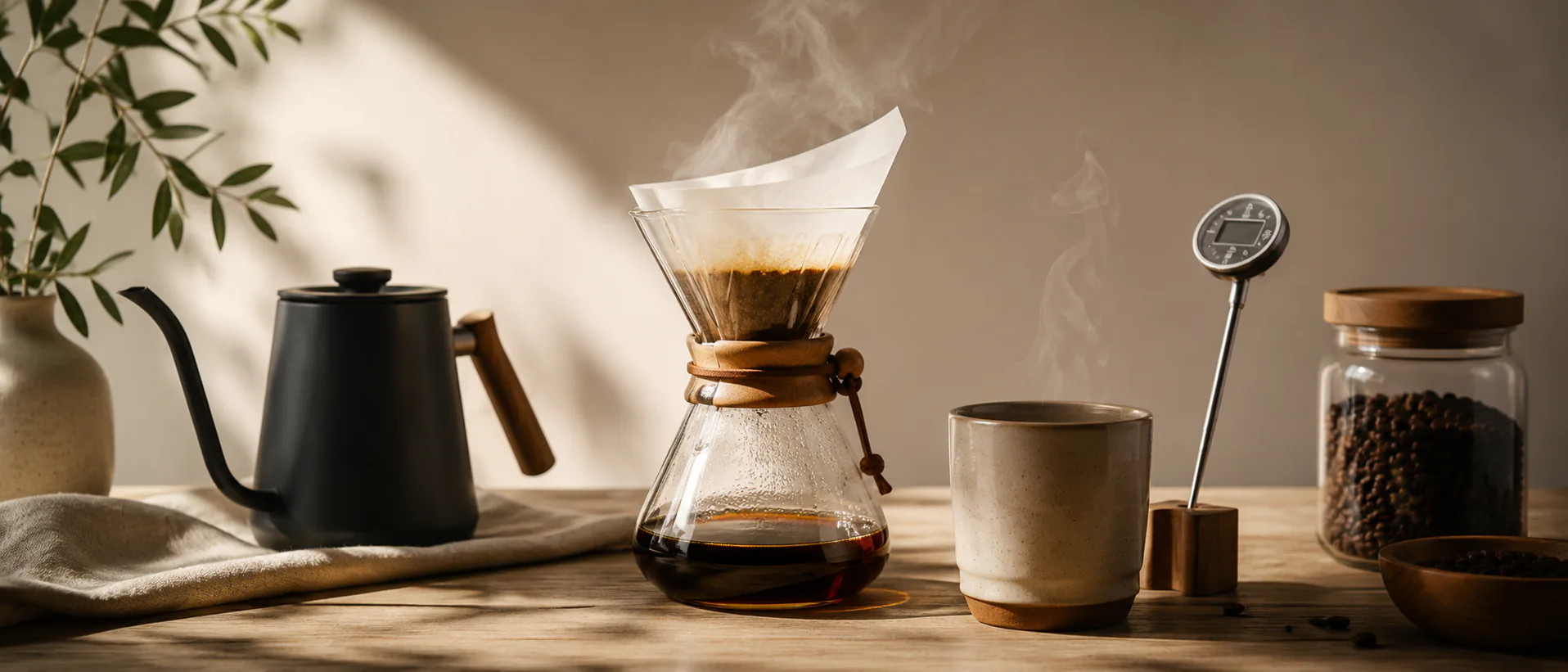
Heat drives the extraction of aromas. Too low a temperature flattens the cup; too high can make it bitter and aggressive. The right point brings out balance and complexity.
From bar to home
Hardy works mainly on espresso and the Italian bar, but knowing other methods helps distributors, trainers and curious clients understand the product better.

Italian bar
The method most tied to the Italian bar: a few millilitres, high pressure, crema, body and speed. Espresso does not forgive distraction: grind, dose, temperature and machine cleanliness change the result in seconds.
Home ritual
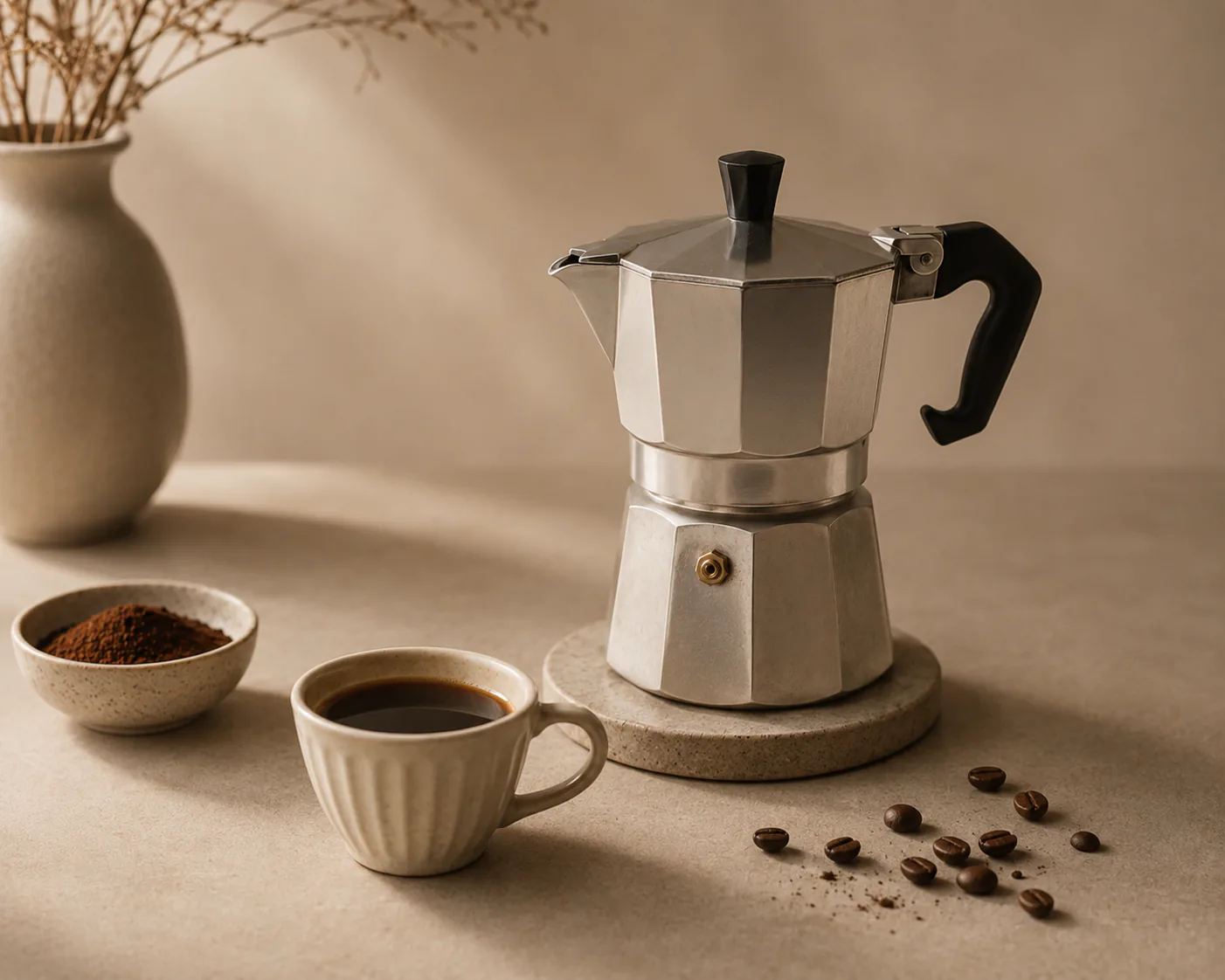
The moka belongs to the Italian kitchen. It works at lower pressure than espresso and returns an intense, familiar, direct cup. It needs good water, a medium grind and measured heat.

Manual control
The V60 is a cone dripper. Shape, water flow and pour technique give great control but demand precision. An elegant method for telling the story of coffee origin.
Elegant filter
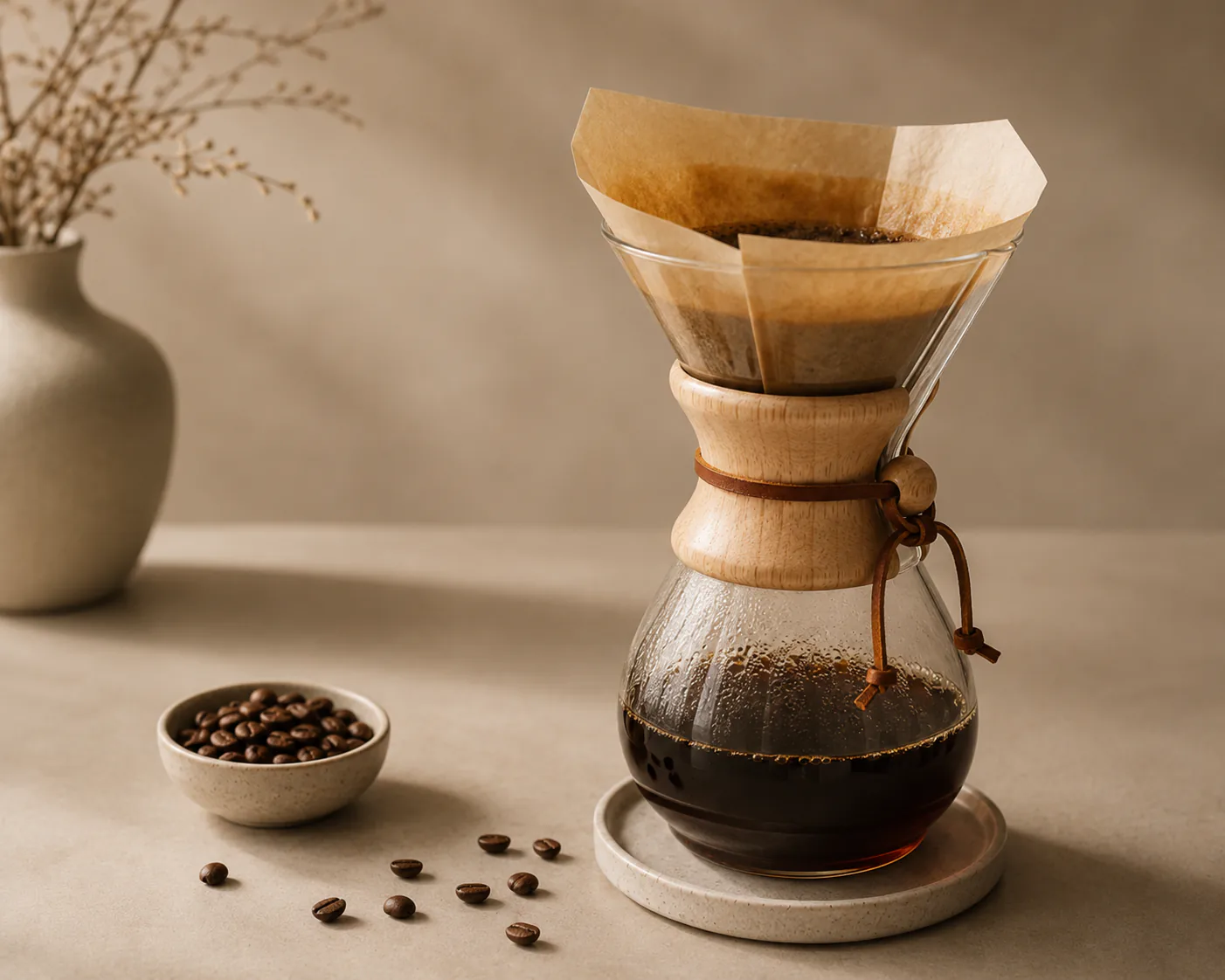
The Chemex uses thicker filters and produces a clean, soft, very orderly cup. It is striking to look at, but when the recipe is correct the result is fine and stable.
Beyond caffeine
A quality decaffeinated coffee is defined long before the cup. Decaffeination takes place on green coffee, when the bean is still raw and rich in the compounds that roasting will turn into aromatic profile.
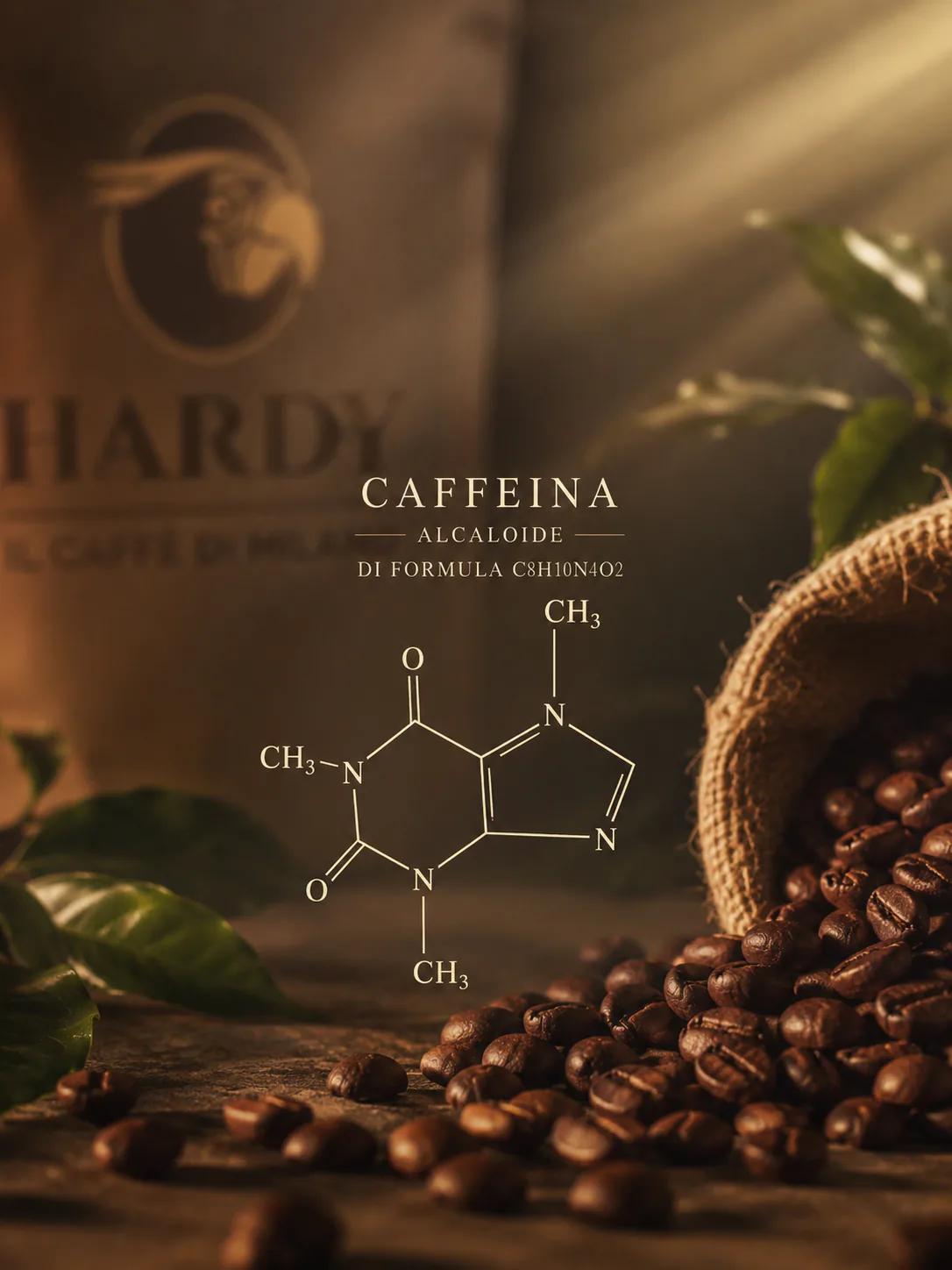
Before roasting
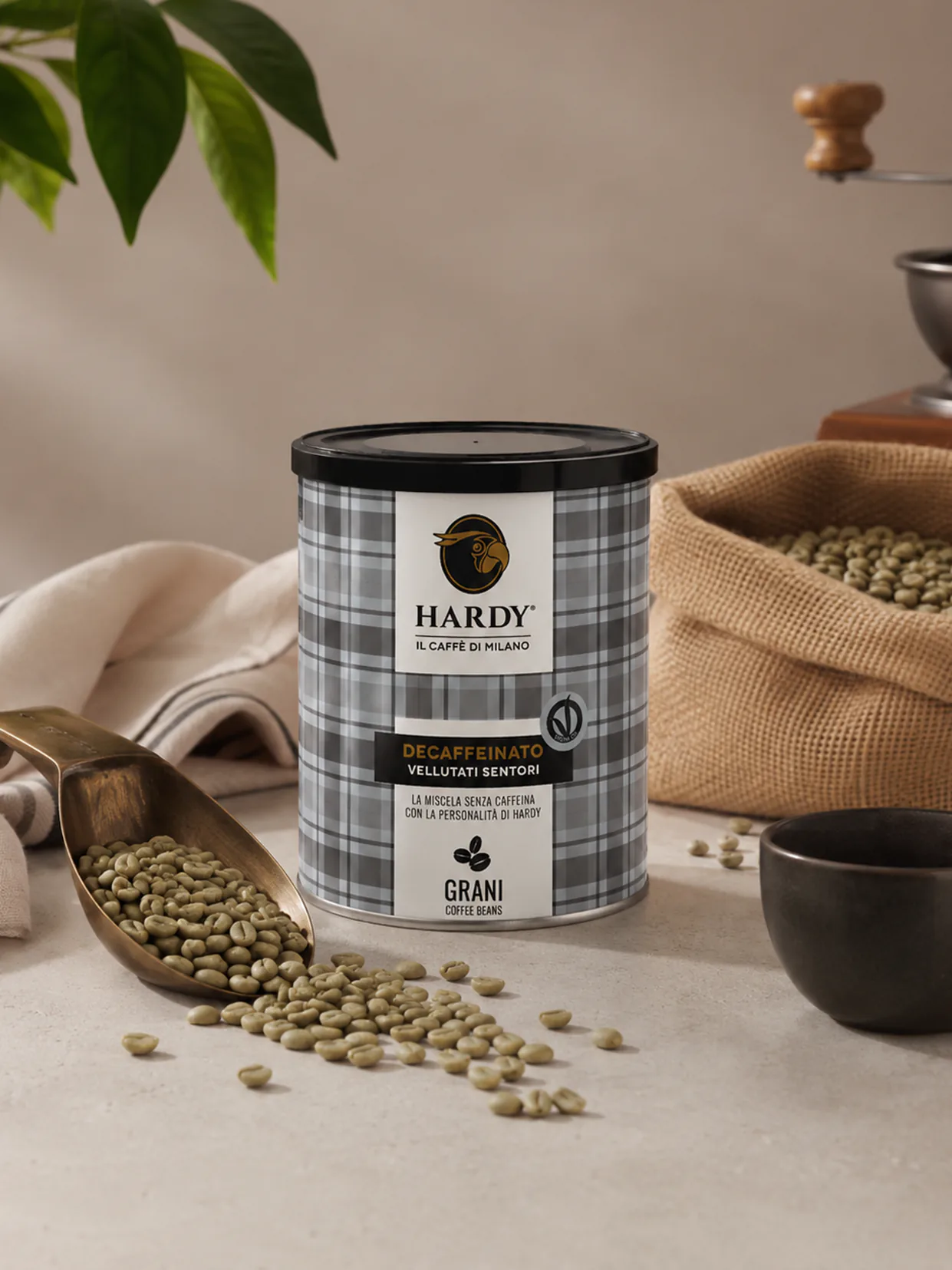
Decaffeination is carried out on green coffee, before the beans are roasted. The process selectively extracts caffeine while preserving the compounds responsible for aroma and cup structure. Only after this step is the coffee roasted to the profile best suited to the blend.
The Hardy method
Hardy uses the ethyl acetate method, valued for removing caffeine effectively while respecting the coffee's aromatic character. Also found naturally in ripe fruit, it binds to caffeine and extracts it from the bean in a controlled way. The coffee is then dried, stabilised and checked before roasting.
An overly aggressive process risks stripping the bean. Ethyl acetate decaffeination, when executed correctly, preserves sweetness, roundness, body and aroma — qualities suited to a decaffeinated coffee enjoyable even as espresso. The result is balanced, soft and close to traditional espresso in the cup.